
JetCabin Freshbook Magazine Interview



Interview and article by: Rick Roseman
"I've been writing articles on top-tier aviation companies for a long time now. It's always great to uncover the things that make them special and learn the faces behind the brand. But once in a great while, you run across a company that surprises you in ways didn't expect. As my initial research and later my interview unfolded on International Jet Interiors, I began to realize something really special about this company and its leadership. If I had to boil it all down to a few words, it would be "a very keen eye for detail". And I don't just mean the interiors they produce. I mean everything. From the elevated knowledge of art and modern design influences they bring to the customer at the very beginning - to the wonderfully evocative photography of each project at the very end. These guys just "get it". I invite you to read my one-on-one interview with Eric Roth, the company's CEO and study the photographs of some of their truly remarkable projects."

Rick Roseman: Good morning Eric and Adrianne. Thanks for joining me. Looks like we all have our coffee so let’s dive in. If it’s OK with you, can we please start by having you tell us a little about when and by whom International Jet Interiors was founded and also perhaps a bit about the market drivers at the time, what precipitated the startup?
Eric Roth: Sure, so, my name is Eric Roth and I founded International Jet Interiors on November 5th of 1986. And the impetus behind it I must say, was a a natural one. I came by it honestly as I grew up in the industry as a kid.
RR: How’s that?
Eric Roth: My dad had a small refurbishment facility working on King Airs and Lears, airplanes like that. I thought I would simply move into his business after college. Unfortunately, he was going out of business at the same moment that I was finishing my education. But still filled with passion for airplanes I took a construction job for the summer, waited it out to raise enough money and finally incorporated in New York State as a small aircraft refurbishment business, which fortunately I’ve managed to turn into what we have today.
RR: 1986, that a lot of years.
ER: Yeah, I mean this is all I know. It's my passion. It's what I love. And happily we’ve earned a very good reputation within the industry worldwide.
RR: Can you next please elaborate a little bit on what size of jets represent your core market today and if multiple classes what roughly is the percentage of each?
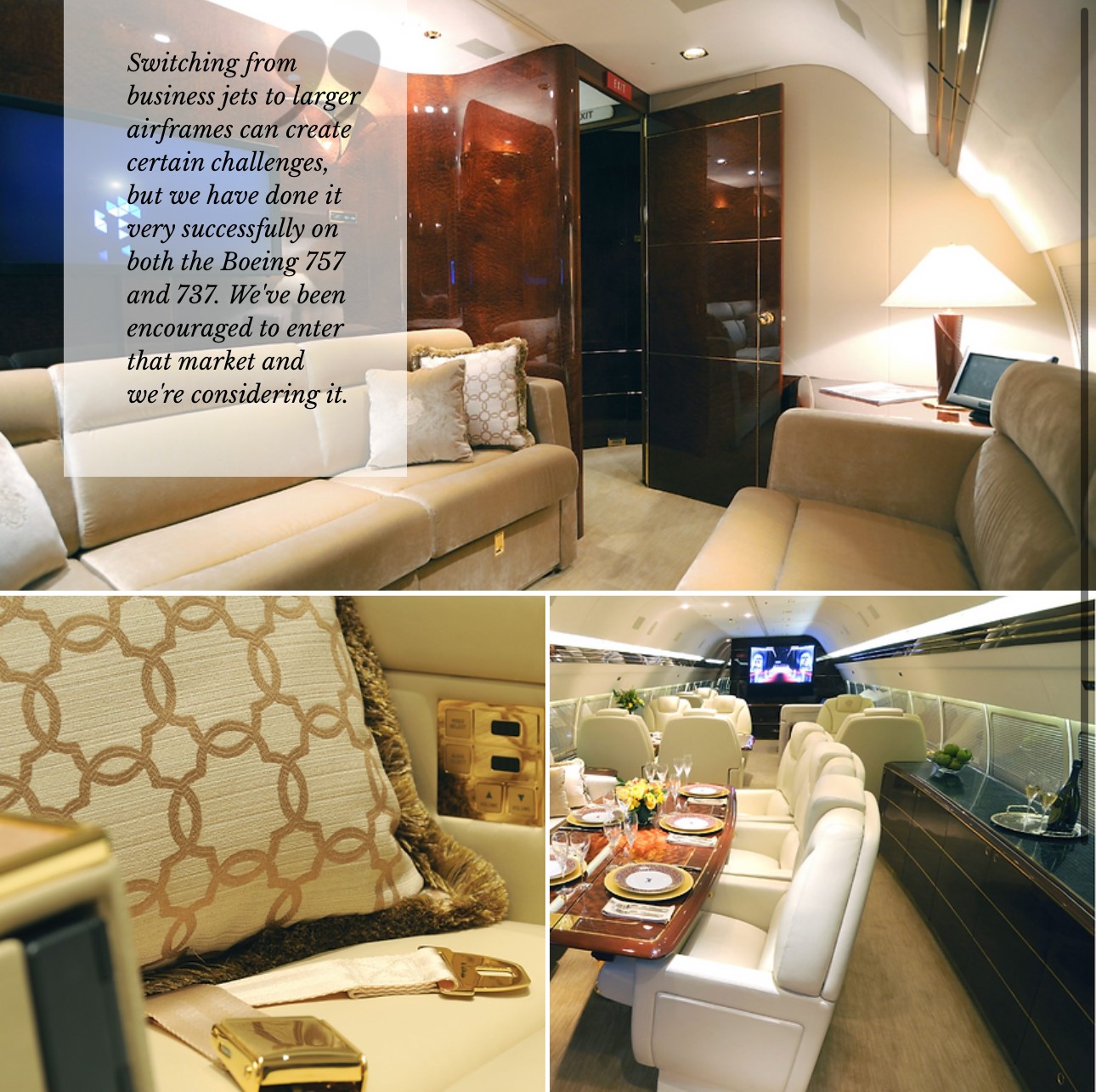
ER: I would say over 95% of our work is the higher end of corporate aircraft. So that's Gulfstream, Bombardier Dassault Falcon and maybe throw Embraer into the mix with their Legacy Jets. We also have sporadically worked on Boeing aircraft. In fact we were just finishing up a Boeing 737 for a client now. But those are far a few between and we haven't really focused on that market. We have been encouraged to enter into that market so we’re considering it. We're in a huge growth stage right now and we've got a lot of really exciting, fun things going on. So, as we expand we're evaluating our role in the marketplace and the types of airframe we’ll pursue going forward
RR: Also as a follow-up to that second question, I wanted to ask you if you find it cumbersome to switch from your core sort of top tier business jets and work on larger aircraft, such as the narrow-body Boeings.
ER: I think it creates certain challenges, most of it being the required research and understanding of the differences between the outfitting of each. Let's say between a Gulfstream 550 and a Boeing 737. So, we've got to be diligent in that research to see if there are any flammability or toxicity requirements that may change as you shift from one airframe to another platform? Obviously, there are certain things that you simply learn along the way but we make sure those are small things - that all the major challenges are met before we ever take on a larger aircraft. We want to ensure our clients know we have the right information and are confident and well prepared once the aircraft rolls into our hangar. Basically, what it boils down to is assessing whether we can exceed client expectations at every turn without any type of excuse. There will be challenges on all jobs, big or small. But that’s our central edict for accepting any job.
RR: Can you tell us a little bit about the size of your facility and if you predominantly serve a regional market there on the upper East Coast or if your clients are from all over the US and the world in fact?
ER: Ok, let’s start off with part A of that question, the size of our facility. We operate out of two 33,000 square foot hangers that are back-to-back. So together we have 66,000 square feet but mostly operate out of only a portion of that. So we have the ability to immediately grow as we need to and take on more square footage within the existing hangers.
With regards to offices and back shops, we've just recently taken more square footage. We're right in the middle of doing a big build-out, which is very exciting. We’re moving shops around for production workflow efficiency and just the additional space that's required. Together we have roughly 20,000 square feet of office and back shops.
RR: Impressive. I wanted to ask if you offer paint at your facility or is that usually sent somewhere else?
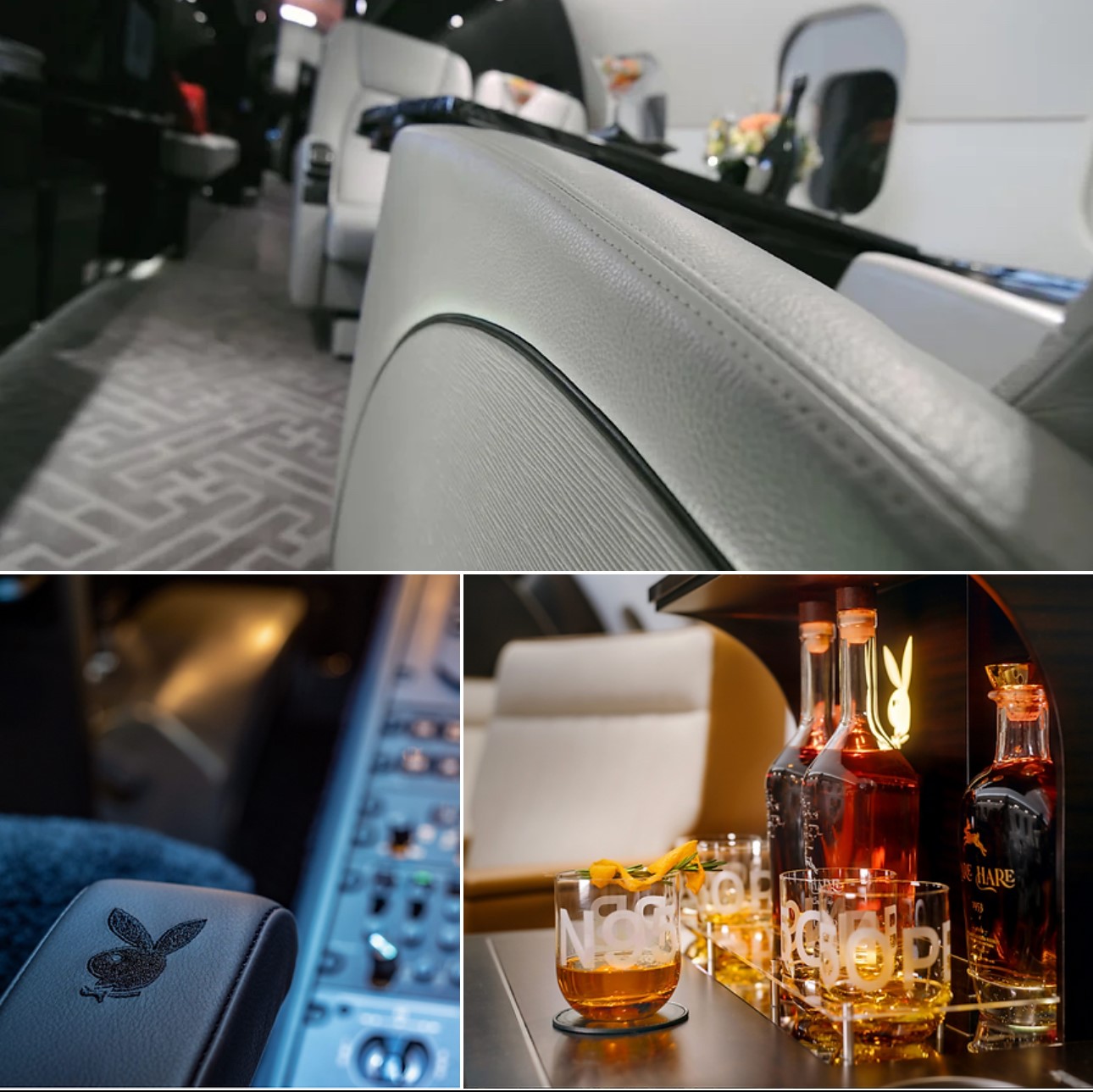
ER: We do offer paint here but not full up start to finish. Let me clarify. We don't do full paint jobs here. But when someone calls and says I need an N number change or add a stripe or recolor existing stripes, we certainly do that on a routine basis. For full paint job requirements, which come up many times a year, we've got relationships with all the major paint facilities throughout the US. We do however manage the paint scheme design, the renderings and specific paints that will be used. We go through the pros and cons of one material versus another with our clients. We also go through external inspection plates etc. areas that can be painted or left unpainted – even things as small as screwheads that might incur keyholding under regular maintenance. These are small things but we focus on details and it’s one of the things that set us apart. Lastly regarding paint, I want to mention that all our livery renderings are produced in 3D so the owner gets a really clear understanding of what the paint looks like from every viewing angle.
It's so much about the customer experience for us. We're really taking it the full life cycle and by doing that we've been able to really amass a good following of customers around the world and we consistently give them that experiencing of something extraordinary.
RR: In looking at your website you seem to focus quite a bit on design. Do you have your own internal design department? And if so, can you sort of take us through the process of working with your customers during the design phase? And also, if you work with independent designers from time to time as well?
ER: Sure, so, great design is subjective as I'm sure you're aware of. I mean everyone has an interpretive value for what good design is. For us. it's first about educating our client on the possibilities, about being a very good listener and asking insightful questions as to what their main goals are. And then pairing that up with what I call a sense of reality and that sense of reality could take in usage at the moment and future usage and various other aspects of how they intent to use the aircraft. We'll sit down and say look, I just bought this aircraft and this is what I'm thinking about doing and my question is always, OK, let's talk a little more about that. Number one, have you owned an aircraft before? Have you been through the refurbishment process prior? What have those experiences been like for you? Then we'll swing over and discuss asset values. So, if you have a G650 or a Global 7500, it may make sense for you to make a certain financial investment.
In that asset class first, let's say a GIV or Challenger 600, it's just what makes sense. Now, that being said every once a while, we do have a client that says “I want what I want, this is what makes sense to me” and we'll say based upon the dollar amount that we're looking at financially if I was an accountant, I would tell you this doesn't make sense, but based upon what you're telling me, if you don't care if you lose x amount of dollars on the backend, but you get to enjoy this for the period of ownership - then I'm okay with it. “It's not the investment that I'm focused on. It's the lifestyle and what it brings me.”
And we've done that with the few clients where they've made that decision but always after we’ve had the conversation and provided appropriate counsel. That way, they will never come back to us and say “Wow, you led me down this road and now I'm into this plane for x amount of dollars way above market, sliding resale value etc." So those conversations are extremely important before we ever get started."
But once we get past the investment strategy, we'll ask questions like “how many hours do you plan on using the aircraft?” And since most of our clients are not first-time buyers at this level, they’ll all have an idea about the hours they spend flying. So, we want to understand that upfront. Then let's say it’s a Part 135 usage and what I'll tell them a little tongue and cheek is, I'm not here from the IRS to do an audit on your flight department. I'm just trying to get an idea of whether white carpet and white leather is practical when you anticipate 400 hours of charter. Again we are leveraging our decades of experience and asking the questions that are important – making sure they’re well informed. But of course, at the end of the day, it's always their decision.

But with those questions answered, it sets our approach for design; the various materials we want to use, durability, UV considerations and the like. And then there are other key considerations like inflight entertainment Cabin Management Systems, LED lighting, floor plan mods, the level of customization they’re seeking etc. Going all out may be great for your ownership, but I think in the charter market, having high demands in a G550 that's going to be going to Europe quite a bit, you're gonna be out of that market. So once again, I step in and educate them – we have that discussion, what makes the best sense.
Similarly, let’s say you've got a big family and you want to take your family, the nanny, your housekeeper and everyone down to Anguilla for beach holidays – this is going to have extreme demands on the layout of a Gulfstream 550.
Here, I'm going to tell you that it's going to be a real challenge to roll all that into a floorplan and still meet the requirements as a 135 operator.
RR: Yes, the value of those conversations can never be overstated. So, do you have some kind of internal design department or interior design showroom there?
ER: So yes, we have a full-time designer on staff. And we have a structural designer as well. Then we have about two or three people that routinely get involved in certain aspects of the design when we need to gain focus in certain aspects of the design.
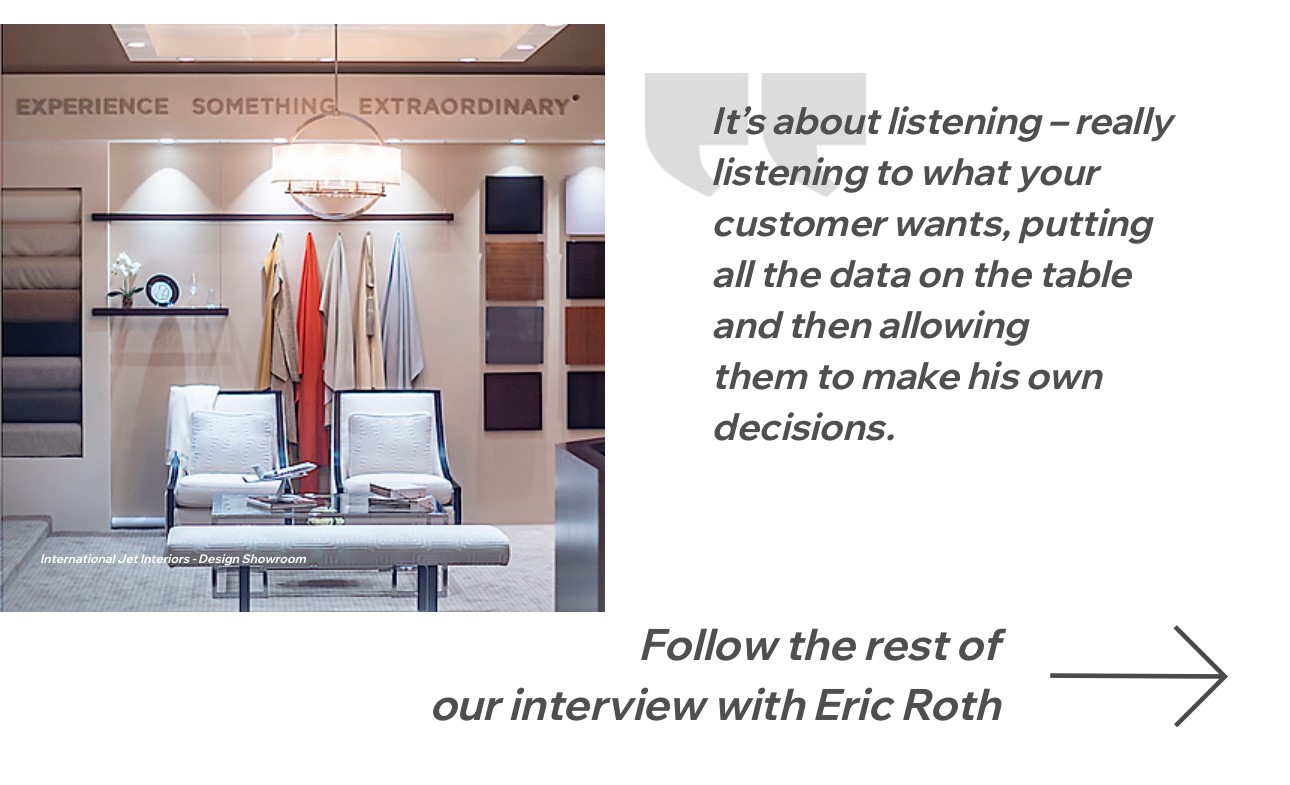
And yes, we've got a robust array of design talent in-house and we have a gorgeous showroom. As a matter of fact, we have both a G550 mockup and a Falcon 7X mockup in our showroom.
This enables us to go through the interior space of either aircraft with our customers and let them get a sense of scale, how certain details or layouts may or may not work etc. The mockups are extremely valuable tools for us always working in tandem with our design department. We can discuss things like PSU locations, side-ledges, lower sidewall panels and all manner of details – real time and all in precise scale to their aircraft.
RR: Yes, full scale mockups are valuable tools to be certain and I’m sure that gives you an edge.
ER: It does, and in that regard, I should point out that I’ve been to all of our competition. And in many cases I've been there as a customer. So, I've had that unique opportunity. Occasionally, we have been brought in because maybe they had a brand-new aircraft being outfitted and they got frustrated with the OEM’s process. But now they’ve purchased a new aircraft and because we have a strong relationship with them, they asked for our help.
RR: Can you shed a bit more light on that?
ER: Well, it’s first having the opportunity to be there as a defacto customer. That is to say, I've been to OEM meetings where you sit down at a big board room table and they're all handing out business cards and shaking hands for half an hour. So you have all those biz cards in front of you but not one person's involved in your aircraft. Not one person could speak intimately.
RR: Yep, I’ve been to my share of those.
ER: Right, and the fact that you’re snickering is because it's true and it's a total waste of time. It usually represents a lot of fuel and time and money.
...Continued from above
And so you walk out of there and you really didn't get any place. Often as the customer, you call them up and find out your supposed customer rep has already been assigned to a different project and now you're starting all over again. To that end, we're offering something different – a more tailored level of personal service and intimacy and you just can’t usually find that at a major OEM or even some of our competition.
As for back here in our facility, I encourage everybody to walk the floor going through the back shops. I'm not talking once a week. I'm talking at least once a day. Why? Because invariably, you discover something that wasn't written up or that wasn't presented that you couldn't see unless the panel was stripped. And then you can bring it up in the morning meeting or right on the spot, and get the issue addressed before it has a chance to impact schedule or affect a contiguous task.
RR: It also seems like you take great pride in precision and artfully crafted cabin details. I think that was something I saw on your website. Can you please tell us how this focus came about and what lengths you go to in ensuring such high levels?
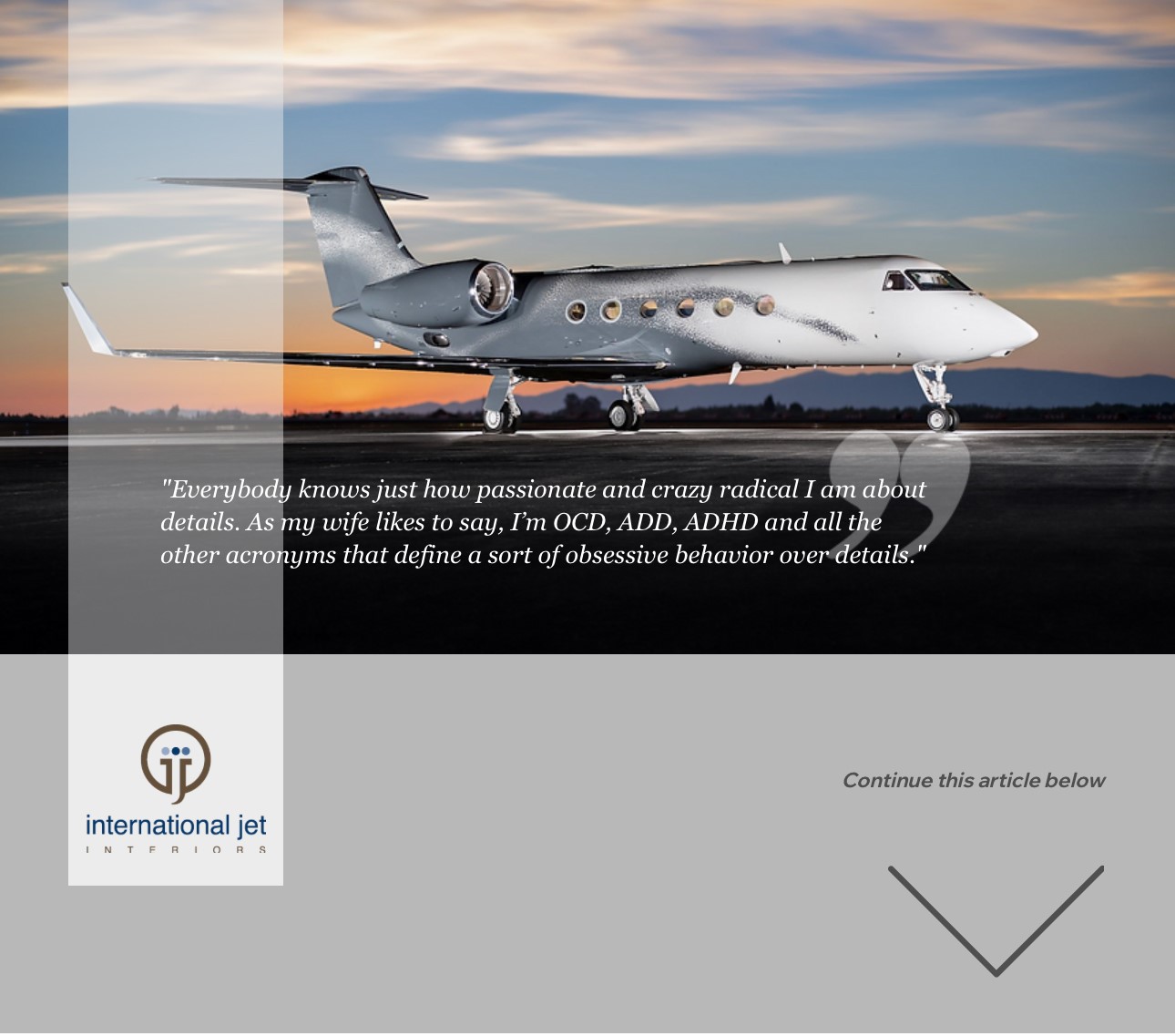
ER: Sure, it's a great question. I guess leadership stops and starts at the top. And of course that starts with me and it's my job to make sure it finds its way down to every one of our people. Everybody knows just how passionate and crazy radical I am about detail. As my wife likes to say, I’m OCD, ADD, ADHD and all the other acronyms that define a sort of obsessive behavior over details. But in terms of our business here at International Jet, it definitely serves us. It would take way too long for me to take you through the hundreds of examples – but suffice to say, we go to extraordinary levels to see that even the smallest details are not overlooked.
RR: I understand but maybe you can give us one example?
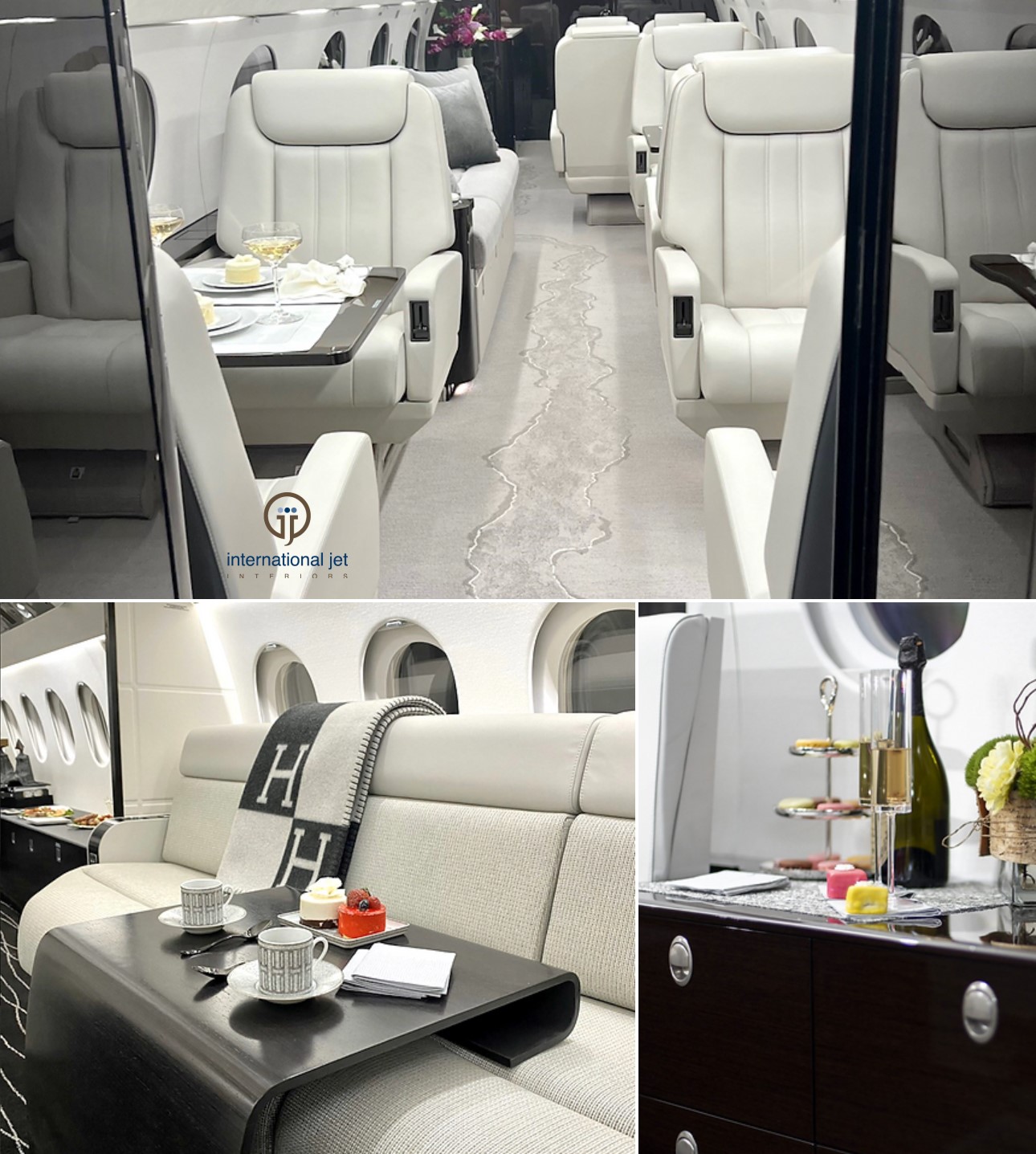
ER: Yes, so here’s a pretty good example. Let’s take USB ports. They’ve never been particulary attractive nor will they ever – but they’re very necessary throughout the cabin, right? So we contract, procure and install 12 USB ports in the main cabin and maybe it lists out at which seat position, but I guarantee you in any proposal, including our own, it doesn't talk about the frame station and the water level. So there's an interpretive value, right? This is where the owner is now entrusting us to make those decisions and to do it in a way that lets them know real thought has gone into it – that we’ve not only placed them – but placed them where they belong, where each passenger has the best possible access to them and ergonomically installed in such a way that someone’s elbow or the seat arm is not going to accidentally clip them off or push one through the Nomex. This is where we excel and it’s what brings our customers back – not to mention indulging my own obsession over details.
It's been our experience that most of our competition doesn't look at it that way, because they are focused on man hours and performance reviews. You were in charge of doing these 38 aircraft this year and you've been over by x amount of hours. So, we're going to use that data and its going to be reflected in your review when in essence this person was just trying to do something that made sense.
"You don't always need to get engineering involved. We've done it a million times this way and who cares if we have an escuccion in my lower side panel that's four inches by six inches with one little outlet in it, which looks ridiculous?" These are things that require being nimble – about putting common sense and aesthetics above standardization. Again it’s what brings our customers back. They notice these things and it has become our stock-in-trade.
RR: Can you give us an example or two of difficult challenges you had to overcome on a particular project?
ER: Ok, so it’s probably easiest to start with some of our recent ones. There are probably three projects that come to mind. There are two G550's I can talk about and the 737 we’re just about to deliver. Let’s take one of the 550's first. The customer came to us and said "I think I bought the wrong airplane." I said "why do you think that?" He had purchased a 550 that was sectioned off into several areas with bulkheads. It had been great for the old owner who wanted all these compartmented areas, but the new owner wanted an open arrangement – more of a sense of volume. It's good to have that kind of wealth, but he simply moved too quickly and told me that if someone came up and offered him a half-million less than he paid, he would take it. He was obviously pretty disappointed in his purchase. I told him hang on - let's review the proposal and what we're doing and let you see what you can't see because you're not supposed to know everything about aircraft interiors - and we do. So, I was able to talk him off the ledge, but he was still far from excited over how we might turn lemons into lemonade.
But as we started coming up with drawings and illustrations where he could visualize it and understand what options there actually were, he gradually began to get excited. That was the first start of the challenge. The other was the floor plan change. He wanted to get rid of the crew rest area, which I can't say I felt good about doing, so I wanted to speak to him about that and thankfully we have fantastic relationships with our friends at the International Aircraft Dealers Association, in addition to being very friendly with a lot of the leading brokers around the world. So, I was able to take advantage of those relationships and say; this is what the client's doing. He bought this airplane. This is the serial number. This is the total time and cycles. This is the expected years of ownership etc. etc.
He's requesting that we modify the floor plan in this part of the modification. What are your thoughts? I wanted to come back with recommendations from four or five leading brokers to give him a real educated understanding of what that meant for his ownership. So on the back end, when he goes to divest himself of the asset, there would be no surprise like “Oh my God, I wish I would have known that before.” In the end we found the perfect ‘informed’ solution and he is very happy with his airplane.

RR: Hang on a minute. You've drawn me into this story about the crew rest but given us no payoff. Did he stay with the crew rest or not?
ER:Of course.
RR: Of course, what? He kept it or got rid of it?
ER:(Roth snickers) No, he got rid of it. Maybe not the best for resale but we got him the best most informed advice and data out there – and it was his decision. And once again, that’s what we do. It’s not always about making a decision that fits with industry standards. It’s about listening – really listening to what your customer wants, putting all the data on the table and then allowing them to make their own decision. And for them in the end, they're still mainly going from Teterboro to West Palm Beach, and so obviously a crew rest does not come into play very often. But you have to peel back the onion and we're excellent at doing that and when you get through those core layers, you really start to discover your customer’s true motivations and desires. This approach is, I think, unique to us and it almost guarantees our success by every measure.
RR: Well that certainly qualifies as a challenge. Good story. Great outcome. You said you have one more example maybe?
ER:Yes. Ok, so we had another owner who was a little over six foot. He says I want to be able to watch a movie with my girlfriend but I don't want to play toesies on the divan. And I want to watch a big TV. How do we make that happen? Okay, so first we talk first about certification, 16g and then we're going to talk about how willing are you to give up her certification? If we do this we're gonna minimize your passenger carry. Are you okay with that? So, what we ended up creating was a 120-inch divan. As you can imagine, only a certain portion of it was legal for taxi, takeoff and landing.
So, our solution was that we made that third part of the divan look aesthetically identical to the rest. Even those highly educated on Interiors would never know until you start lifting up cushions or looking at documentation. Then we created a large credenza on the other side – out of which popped a 40 inch monitor. And if you know the cabin width of a 550, you know that’s not much distance, so the screen looks huge.
RR: Good solution. I can guess he was happy?
ER: Very happy! And I could go on of course. There are challenges like these on virtually every job we do – but in truth, it’s the challenges that make it fun and stimulating. It forces us to flex our creative muscle, find solutions and then watch the customer walk away happy. All in all, it’s a very satisfying job – not only for me but everyone that works here.
RR: I’m sure that’s very true and I’m sure you look back on each of those stories with an experiential fondness. And I would well imagine your customers do the same and never forget them when it comes time for their next refurbishment.
ER: Well, that is the hope, yes! We’re very proud of our client roster – especially our repeat customers.
RR: Well Eric, I certainly want to thank you and Adrianne for your time this morning. Really great interview and for all our readers that don’t know about you already, this will give them a great insight into what you guys do up there everyday on Long Island at International Jet Interiors. Next time I get up that way, I would love to stop by for a visit and say hello!
ER: You’d be welcome anytime Rick!
Discover Jet Cabin Freshbook Online Interview Here
